Bridge Guard in the Karoo by Rudyard Kipling

In his selection A Choice of Kipling’s Verse, made in 1941, T S Eliot wrote that Kipling should not be seen as a bad poet but as a great writer of verse. He didn’t really give a clear definition of what he thought the difference between “poetry” and “verse” to be, though. Understandably, given the time it was published, his choice tended more towards the patriotic side of Kipling’s work.

Craig Raine’s 1991 selection included poems that Eliot had omitted, because Raine was keen to stress Kipling’s skill as a poet. The one below is an example. Kipling had already published his Barrack Room Ballads and this is a more poetic development of those perhaps, with the same concern for the plight of the ordinary soldier. It’s a military poem, set during a war, but it doesn’t describe combat. It was published in The Times in 1901, then included in the collection The Five Nations. It reflected Kipling’s experiences as an observer of the Boer War.  

It’s a wonderfully vivid evocation of the South African landscape and the isolation of the men guarding the bridge. It’s impossible to read without the scene coming clearly into one’s mind’s eye. It’s almost cinematic. Kipling’s precise choice of words, the short lines and the strong rhythm all contribute to the overall effect. Has a sunset ever been described in a better way than the second and third verses here? Notice also that as the sun sets and night descends, later in the poem, Kipling picks out the sounds that can be heard.

Whatever one thinks of the “verse” or “poetry” argument, I think this is Kipling at his very best and you won’t be surprised to find it is my favourite of his poems.

Bridge-Guard in the Karroo by Rudyard Kipling

 “ …and will supply details to guard the Blood River Bridge”

District Orders: Lines of Communication
—South African War.

Sudden the desert changes,
  The raw glare softens and clings,
Till the aching Oudtshoorn ranges
  Stand up like the thrones of Kings—

Ramparts of slaughter and peril—
  Blazing, amazing, aglow—
’Twixt the sky-line’s belting beryl
  And the wine-dark flats below.

Royal the pageant closes,
  Lit by the last of the sun—
Opal and ash-of-roses
  Cinnamon, umber, and dun.

The twilight swallows the thicket,
  The starlight reveals the ridge.
The whistle shrills to the picket—
  We are changing guard on the bridge.

(Few, forgotten and lonely,
  Where the empty metals shine—
No, not combatants—only
  Details guarding the line.)

We slip through the broken panel
  Of fence by the ganger’s shed;
We drop to the waterless channel
  And the lean track overhead;

We stumble on refuse of rations,
  The beef and the biscuit-tins;
We take our appointed stations,
   And the endless night begins.

We hear the Hottentot herders
  As the sheep click past to the fold—
And the click of the restless girders
  As the steel contracts in the cold—

Voices of jackals calling
   And, loud in the hush between,
A morsel of dry earth falling
  From the flanks of the scarred ravine.

And the solemn firmament marches
  And the hosts of heaven rise
Framed through the iron arches—
  Banded and barred by the ties,

Till we feel the far track humming,
  And we see her headlight plain,
And we gather and wait her coming—
  The wonderful north-bound train.

(Few, forgotten and lonely,
  Where the white car-windows shine—
No, not combatants—only
  Details guarding the line.)

Quick, ere the gift escape us!
  Out of the darkness we reach
For a handful of week-old papers
  And a mouthful of human speech.

And the monstrous heaven rejoices,
  And the earth allows again,
Meetings, greetings, and voices
  Of women talking with men.

So we return to our places,
  As out on the bridge she rolls;
And the darkness covers our faces,
  And the darkness re-enters our souls.

More than a little lonely
  Where the lessening tail-lights shine.
No—not combatants—only
  Details guarding the line!
Mrs Bathurst by Rudyard Kipling

Rudyard Kipling’s story Mrs Bathurst was published in 1904 and reveals Kipling as a rather more modern writer than he is usually considered to be.

The plot makes use of the cinema and it may well be the first piece of fiction to do so. The fractured style of the story may be modelled on the cinema, rather in the way that one can see the early poetry of T S Eliot making use of cinematic imagery.  

The term “It” to describe a woman’s appeal to men appears here, a usage that Kipling is thought to have invented, to go alongside the many phrases he added to the language. What makes the story feel modern is the way it is told and it may be that part of what Kipling is telling us here is the impossibility of ever really knowing anyone else.

On the South African coast, just after the Boer war, the narrator is sitting and talking to his railwayman friend, Hooper. They are then joined by a royal marine, Pritchard, and a sailor, Petty Officer Pyecroft, who is a recurring Kipling character. At first the story seems to be going nowhere, as the four men chat about the idea of going absent without leave, as opposed to desertion.

But as the tale progresses, the first-person narrative gives way to dialogue. The narrator is merely a convenient device to set the scene for the anecdote that follows. There is no authorial voice or viewpoint. The tale is told in a fragmented way, mostly by Pyecroft, who does not quite understand the events he is recounting. As he says “all I know is second-hand so to speak” and there is no help given to the reader to interpret any of this.

He tells of his shipmate Vickery’s obsession with a Mrs Bathurst who kept a small hotel for sailors in Auckland, New Zealand. It’s never made clear exactly what the relationship between Vickery and Mrs Bathurst might have been in the past. The marine, Pritchard, is also familiar with her and the hotel and he describes to the others what she is like.

The finale with its striking visual image of two charred corpses is provided by Hooper, who has dropped hints about this earlier in the tale. One body can only be identified by false teeth and a tattoo, and the identity of the other remains a mystery. Different parts of the story have been told by Pyecroft, Hooper and Pritchard, who were more witnesses to events than participants, and the reader must piece it all together as best they can. Everything has been seen from the outside.

Not every question raised by the story is answered at the end. What exactly took place in the meeting between Vickery and the captain of his ship before he was sent ashore? And at the very end it appears that Hooper is going to remove the false teeth from his pocket but thinks better of it.    

The use of the film image of Mrs Bathurst herself is very interesting. It’s mentioned that someone in the audience jumps when they see the image of the train pulling into the station. Was Kipling familiar with the story about the audience reaction to the Lumiere Brothers’ first showing of their film or was this the true source of it?

There is also the question of just why Vickery is so obsessed with the film of Mrs Bathurst. He thinks it was taken in London, gets drunk after seeing it, then insists on going back to see it again four nights in a row, with Pyecroft in tow to confirm that it is indeed her on the screen. It has been suggested by Dr Oliver Tearle that Mrs Bathurst is dead. There are hints in the story that this may be so. That interpretation would make it a sort of ghost story. On the other hand, it is very difficult now when we are surrounded by moving images of people both alive and dead, to feel the impact that early films made on their first audiences.

However one reads it, this is certainly one of Kipling’s most cryptic tales. In his memoirs he wrote about his method of writing, which was to cut, lay the story aside for a while then go back to it and cut some more. He considered that what had been cut would have a lingering influence on the words that remained. One can see how this story might have been written in that way.

Rather ironically perhaps, there is no known surviving film footage or audio recording of Rudyard Kipling himself.

A Smuggler’s Song by Rudyard Kipling

When I watched Wimbledon on the TV not so long ago, a virtual tour of the clubhouse revealed those words of Kipling’s that the players see before they walk on to the Centre Court: “If you can meet those two imposters, triumph and disaster, and treat them just the same.”

That reminded me of one of my favourite Kipling poems, A Smuggler’s Song.

When Kipling returned from India and settled in Sussex, he saw the English countryside and its history with an outsider’s eye. His two books of historical stories set there are the sort of children’s books that are not really intended just for children. They contain some of his finest poems. A Tree Song, Cities and Thrones and Powers, and A Smuggler’s Song are in Puck of Pook’s Hill. If, The Way Through the Woods, and The Thousandth Man are in Rewards and Fairies.

A Smuggler’s Song poem is wonderfully evocative, with its rhythm capturing the movement of the ponies. It brings a clear picture of the night time activities of the “gentlemen” to mind. The world depicted here is the eighteenth century Dymchurch that Russell Thorndike wrote about in his Doctor Syn stories.

A Smuggler’s Song by Rudyard Kipling

If you wake at midnight, and hear a horse’s feet,
Don’t go drawing back the blind, or looking in the street;
Them that ask no questions isn’t told a lie.
Watch the wall, my darling, while the Gentlemen go by!

Five and twenty ponies,
Trotting through the dark —
Brandy for the Parson,
Baccy for the Clerk;
Laces for a lady, letters for a spy,
And watch the wall, my darling,
While the Gentlemen go by!


Running round the woodlump if you chance to find
Little barrels, roped and tarred, all full of brandy-wine,
Don’t you shout to come and look, nor use ’em for your play.
Put the brishwood back again — and they’ll be gone next day!

If you see the stable-door setting open wide;
If you see a tired horse lying down inside;
If your mother mends a coat cut about and tore;
If the lining’s wet and warm — don’t you ask no more!

If you meet King George’s men, dressed in blue and red,
You be careful what you say, and mindful what is said.
If they call you “pretty maid,” and chuck you ‘neath the chin,
Don’t you tell where no one is, nor yet where no one’s been!

Knocks and footsteps round the house — whistles after dark —
You’ve no call for running out till the house-dogs bark.
Trusty’s here, and Pincher’s here, and see how dumb they lie —
They don’t fret to follow when the Gentlemen go by!

If you do as you’ve been told, ‘likely there’s a chance,
You’ll be given a dainty doll, all the way from France,
With a cap of Valenciennes, and a velvet hood —
A present from the Gentlemen, along o’ being good!

Five and twenty ponies,
Trotting through the dark —
Brandy for the Parson,
‘Baccy for the Clerk;
Them that asks no questions isn’t told a lie —
Watch the wall, my darling,
While the Gentlemen go by!
 

At the End of the Passage by Rudyard Kipling

I’ve been re-reading some of my favourite Rudyard Kipling stories, as I do from time to time. I consider him one of the best of short story writers, but it has to be said that there are few writers whose best and worst are so far apart. His stories range from the unforgettable to the unreadable. At the End of the Passage is one of the good ones, I think.

Four young colonial administrators in India are in the habit of getting together once a week for a game of whist. They are prepared to travel a considerable distance to do so, because they are the only Europeans for miles around. Over dinner they discuss the difficulties they face and the way life in India is misunderstood back in England. The host, Hummil, is in a thoroughly bad temper and the doctor stays behind to find out what is the matter. It turns out that he has not slept for days and is haunted by nightmare visions. He has even seen his own double sitting at the table.

The doctor gives him medicine to help him sleep and disables his guns, in case Hummil is tempted to shoot himself. He offers to send him off on sick leave, but Hummil refuses because his probable replacement is married and he thinks that neither the man nor his wife are physically robust enough to cope with the environment. I won’t spoil the story for those who have not read it by describing what happens after that.

Part of what makes the story so gripping is the vivid way in which Kipling conveys the harshness of the conditions and the effect that has on those who are not used to them. “There was neither sky, sun, nor horizon – nothing but a brown purple haze of heat.”

These men have a shockingly relaxed attitude to death. If they haven’t heard from someone for a week, they check up on him to make sure he is still alive. Suicides and deaths from cholera are quite common. They are all under thirty, but are described as “lonely folk who understood the dread meaning of loneliness”.

All this takes its psychological toll and here we come to the point. Has Hummil been driven slowly mad by all this, or is there a supernatural explanation for his mental afflictions?  

This 1890 story is presented with gaps in the narrative and ambiguities that anticipate the style of Kipling’s later work where the reader has to work quite hard to understand just what exactly has happened and what it might mean.

On the one hand, Kipling is presenting the lives of administrators in India in a realistic way to a readership that may be unfamiliar with life there. On the other, the story can be read as Kipling’s admission that the imperial enterprise is doomed to fail, because the environment is simply too difficult for those not born to it to thrive in.

That’s the funny thing with Kipling. He’s regarded as the great propagandist for empire, yet a close reading often reveals that he is actually saying something rather different.   

The Gardener by Rudyard Kipling

I’m always aware, writing these pieces, that I’m trying to point people in the direction of stories, novels and poems they may not have read. I try to avoid spoilers as much as I can for that reason. I’m faced with a bit of a quandary here, because it’s difficult to say anything at all about The Gardener by Rudyard Kipling without giving away too much and spoiling the effect of reading it for the first time.

I’ll just say that this 1925 story of first world war bereavement is one of Kipling’s most powerful. It’s quite short for a Kipling story of this period, only about fifteen pages, and this concentrates the effect. Any selection of his best stories tends to include it, and rightly so, I think.

It was collected in volume form in Debits and Credits, Kipling’s first collection to be published after the war had ended. This also contains the stories in which members of a masonic lodge help each other to overcome the psychological scars of the conflict. One of these is the mysterious A Madonna of the Trenches. I don’t think it was an accident that The Gardener was placed at the end of the volume. 

Kipling was a successful man both artistically and financially, but his life was touched by tragedy. His daughter Josephine died of pneumonia at the age of six in 1899. His only son John was posted as missing at the 1915 battle of Loos and his body was not found during Kipling’s lifetime. Kipling later worked for the Imperial War Graves Commission. The Gardener came out of his experience of the war and its aftermath.

There’s a sense in this story that Kipling is speaking to all those who had lost relatives on the western front. One can only imagine what it can have been like to read it when it was first published, in a world where everyone knew somebody who had lost someone.

We can be sure that the details of the visit to the Belgian cemetery are accurate. Kipling lays the scene before us with cinematic detail, the thousands of wooden crosses yet to be replaced by gravestones. How can the main character possibly find the grave she is looking for?

The last page or so of this story packs an emotional punch ensuring that once read, it will never be forgotten. Indeed, the meaning of the story depends on a single word on that last page, which inspires the immediate desire to re-read it, to make sure that one has understood correctly.

Kipling introduced many phrases to the English Language; even now he scores quite highly in a list of quotations. It’s often the case that people know the words but not who wrote them.

How many people know that he was responsible for the poignant inscription that is still visible on so many gravestones in France and Belgium?

“A Soldier of the Great War. Known unto God.”

The Eagle of the Ninth by Rosemary Sutcliff

The Eagle of the Ninth was a favourite book of mine when I was younger. It was fascinating to re-visit it. Published in 1956, it was aimed at young people, but the only way in which it is a children’s book is that the violence and sex are toned down. The style of writing is enjoyably straightforward, for adults or children, and there is a strong sense of the British landscape. There is no feeling that the author is condescending to a youthful readership.

Set in Roman Britain, or at least the Britain that Rome is trying to subdue, “a place where two worlds met without mingling”, the story concerns the search for the missing standard of the ninth legion, the eagle of the title. The legion marched north of Hadrian’s wall and was never heard of again. Were they defeated in battle by the British and all killed, or did they revolt against their officers?

The young hero, Marcus, invalided out of the Roman army, volunteers to go north with his British companion, Esca, to find out what happened to the legion, and its commander, his father. It is both a personal quest and an official mission.

This book is a very good example of the way in which imaginative writing can bring the past to life in a way that factual history books cannot. There is a powerful sense of what a less-populated Britain was like: “On they went, following the road that now ran out on a causeway between sodden marsh and empty sky, now plunged into deep boar-hunted forest, or lifted over bleak uplands where nothing grew save furze and thorn-scrub.”

When Marcus and his uncle Aquila play a game of draughts by the light of an oil lamp, in what is modern-day Silchester, the reader has a clear impression of the room in the villa as an island of warmth and peace in the darkness of this wild country where “the wind moaned through the desolate woods, the skies wept. . .”

There is a touch of something supernatural about the fate of the legion. Esca saw them marching, and recalls: “But the mist was creeping down from the high moors, and the legion marched into it , straight into it, and it licked them up and flowed together behind them, and they were gone as though they had marched from one world into another.” There is also what we might now call folk horror, with the missing Roman eagle finally being discovered as an object in a pagan ritual.

Marcus has a dream, in which he sees the Roman column marching northwards. In a chilling moment, he realises there are no faces under the metal helmets. Reading now, this sent a tingle up my spine, and at the same time I remembered how exactly the same thing had happened the first time I read it long ago.

Books stay the same but we change and that is part of the fascination of re-reading. Marcus’ shattered leg destroys his hopes of a military career. In the end he is partially cured. He can get around, but with a limp, and is not fit enough to go back to the army. He has to settle for what he has got. As a teenager bursting with health, I did not notice the disability theme here, but I do now.

I am not usually keen on biographical interpretations of fiction, but in this case, it is fascinating to know that Rosemary Sutcliff suffered grave ill-health, spending much of her life in a wheelchair. The vivid action scenes were created purely from her imagination. I don’t think she had ever actually been able to ride a horse, for example.

I have seen it suggested that she is one of the only authors to have been directly influenced by Rudyard Kipling. I think that’s unfair on Kipling, because his influence was so all-pervasive that it can hardly be seen now. For example, where would the modern spy story be without Kim?

Nevertheless, The Eagle of the Ninth does partly derive from three particular stories of his. These are “On the Great Wall” and “A Centurion of the Thirtieth” from Puck of Pook’s Hill and the Indian army story “The Lost Legion”.

There are also several “lost legion” stories from the first world war, about units that seemingly disappeared on the battlefield, that may be an influence. The anecdote about the ghostly legion seen in York to this day is in there somewhere, too.

Perhaps we should see The Eagle of the Ninth as belonging to the post-war period when it was first published, with its disabled young officer hero, missing father, and missing soldiers.

In the end, despite the weather, Marcus decides to stay on and make his life in Britain. It’s clear that we are meant to see him as our common ancestor. This glimpse into the past sees us as the modern descendants of the Romans, but also as the inheritors of something older and stranger.


The Way Through the Woods by Rudyard Kipling


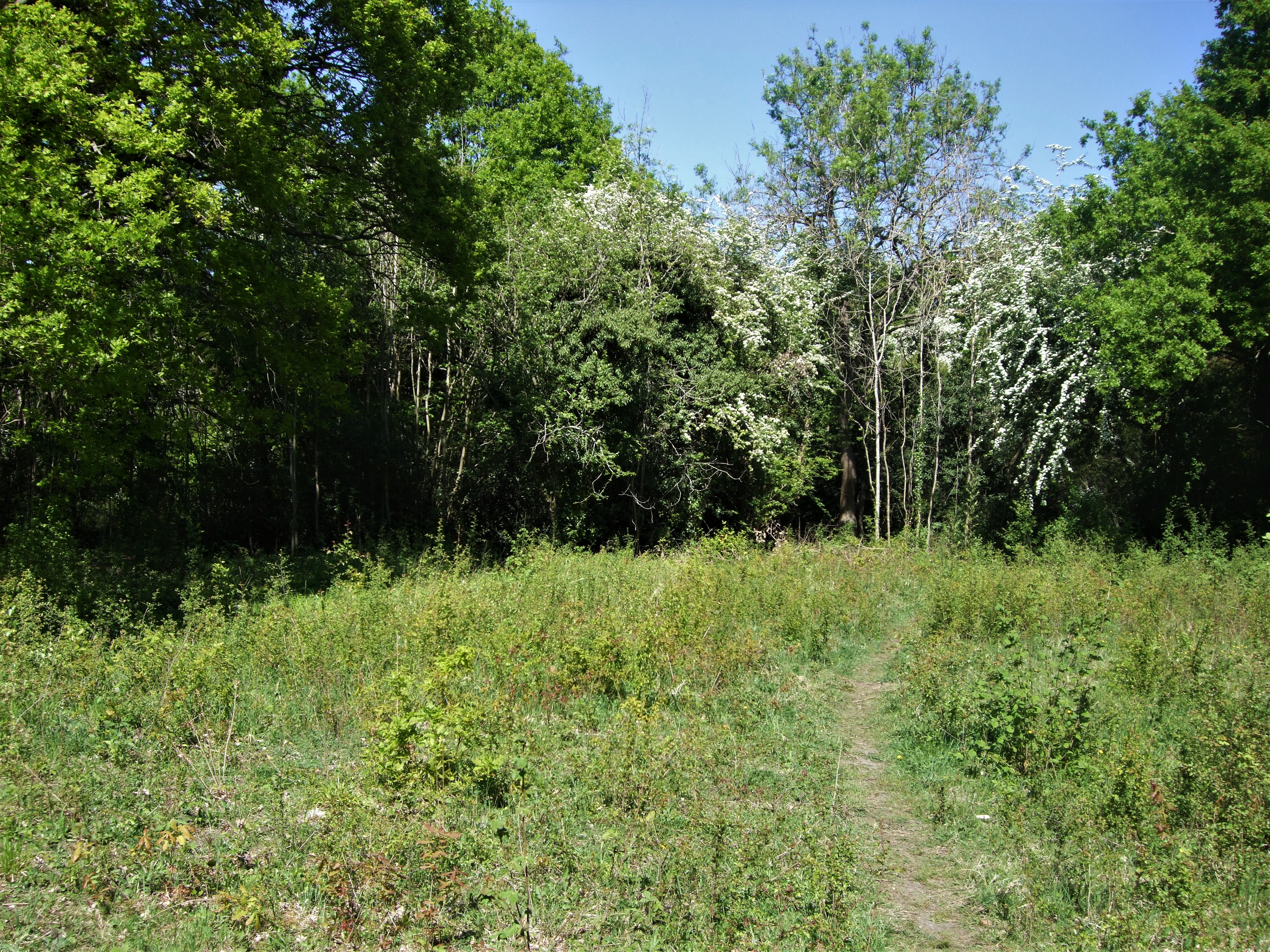
DSCF3190 (2)


I’m lucky enough to live within ten minutes’ walk of some woods that I’ve known since I was a boy. It’s been a life saver to be able to go there during the lockdown. The place has been transformed, with no planes overhead and much less traffic noise.

Everything smells fresh and the birds all sing at the same time so it’s hard to tell the calls apart. Today we went a little further off the beaten track and surprised a bird in a hole in a tree trunk.

So many trees have grown up since I first knew the place. It’s a nature reserve now and allowed to run wild. It’s hard to pick out the features I knew so long ago and the paths seem to lead in different directions from how I remember them. I found the sunken field with a concrete retaining wall, where they used to race bicycles. It’s completely overgrown now.

As I wander the paths, trying to orientate myself, the opening words of Kipling’s poem come into my mind.


The Way Through the Woods

They shut the road through the woods
Seventy years ago.
Weather and rain have undone it again,
And now you would never know
There was once a road through the woods
Before they planted the trees.
It is underneath the coppice and heath,
And the thin anemones.
Only the keeper sees
That, where the ring-dove broods,
And the badgers roll at ease,
There was once a road through the woods.

Yet, if you enter the woods
Of a summer evening late,
When the night-air cools on the trout-ringed pools
Where the otter whistles his mate,
(They fear not men in the woods,
Because they see so few.)
You will hear the beat of a horse’s feet,
And the swish of a skirt in the dew,
Steadily cantering through
The misty solitudes,
As though they perfectly knew
The old lost road through the woods.
But there is no road through the woods.